Eastern Polytechnic Practicing School situated at the Eastern Polytechnic College Campus in Kenema City, was engulfed by mysterious fire on Wednesday 19th October 2011. The four-classroom building was constructed by the Eastern Polytechnic Estate Department and funded by US Embassy, Sierra Leone Government and Community Teachers’ Association (CTA) in Kenema City.
The structure hosted classes 5 A and B and 6 A and B, staff room and Headmaster’s office. Several documents and other materials needed to run the school were destroyed. The cause of the fire is still not known at the time of going to press but one of the security men at the Eastern Polytechnic compound said that they noticed the fire around 2am on that fateful night. College Practice School authorities were quoted as saying that the entire structure including the entire facility of the school has no electricity supply; so electrical fault has been ruled out. The disaster has provoked serious debate in and around Kenema.
The burning of the administrative building came at a time the educational sector of the country and Kenema District in particular is on the spotlight for the wrong reason.
Othman Sheriff is an experienced Sierra Leonean development professional, peacebuilding practitioner, professional journalist and human rights advocate with over two decades of engagement in community development, youth empowerment, education, humanitarian assistance and international development cooperation. Born and raised in Kenema District, Eastern Sierra Leone, he has dedicated much of his professional career to improving the socioeconomic conditions of vulnerable and marginalised populations, particularly disadvantaged young people, women, children and underserved rural communities.
As the Founder and Programme Director of Youth in Action for Development (YAD), Sheriff has played a leading role in mobilising international development assistance and coordinating community-driven interventions aimed at poverty reduction, sustainable livelihoods, social inclusion and grassroots development. Over the years, he has facilitated the mobilisation and implementation of development projects worth billions of Leones, supported by international development partners, including European development institutions, humanitarian organisations and United Nations agencies.
A committed advocate for free and inclusive Technical and Vocational Education and Training (TVET), Sheriff spearheaded the establishment of the Youth Resource Academy (YRA) in 2018, through which he has championed access to practical, employment-oriented education for underprivileged youth, particularly young women, school dropouts, single mothers, widows, unemployed youth and individuals from economically disadvantaged households. So far, the Academy has provided vocational, technical and entrepreneurship training opportunities to more than 2,000 youth helping them acquire marketable skills, pursue self-employment and improve their economic independence. He also solicit funds to provide start up kits for the youth who graduated from the academy.
In addition to his development and humanitarian work, Sheriff serves as the Editor-in-Chief and CEO of Critique Echo Newspaper, using journalism as a platform to promote accountability, responsible governance, social justice and public awareness of critical socioeconomic and human rights issues.
He is a dedicate member of many international peacebuilding networks including the United Religions Initiative (URI), International Association of Educators for World Peace (IAEWP), Intercultural Leaders Network of the United Nations Alliance of Civilisations (UNAOC)`s Youth Solidarity Fund, and the alumni Association of King Hamad Youth Empowerment Awards.
Through his leadership, advocacy and international partnerships, Sheriff continues to champion a vision of Sierra Leone in which disadvantaged young people have equitable access to education and economic opportunities, women and girls live free from violence and discrimination, human rights are respected, and communities are empowered to pursue peaceful, inclusive and sustainable development.

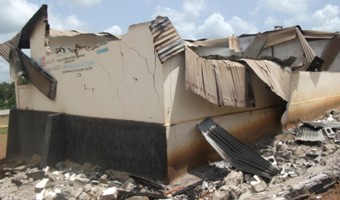 Eastern Polytechnic Practicing School situated at the Eastern Polytechnic College Campus in Kenema City, was engulfed by mysterious fire on Wednesday 19th October 2011. The four-classroom building was constructed by the Eastern Polytechnic Estate Department and funded by US Embassy, Sierra Leone Government and Community Teachers’ Association (CTA) in Kenema City.


I found the information on this post beneficial.