
By Abdulai Mansaray
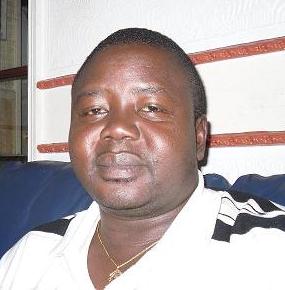 |
| Abdulai Mansaray, Author |
The last time I checked, the national police force of the Republic of Sierra Leone was charged with the responsibility for law enforcement and crime investigation. Since its establishment by the British Colony back in 1894,and as one of the oldest police forces in West Africa, the job description and mission of the force had broadened into a wider remit over the years to include crime prevention, detection and prosecution of offenders, maintaining public order, ensuring safety , security and enhancing access to justice. The one conspicuous absence is “making the law”. Except if some of us have suddenly suffered from selective and temporary amnesia, the police force has never been charged with the duty of “making the law”. There is no doubt that input from law enforcing sectors are required in the legislative arm of governments, but taking arbitrary decisions in creating new laws have never been the domain of the force.
It was therefore a break into new territory for the head of police traffic division, Superintendent Ambrose M. Sovula to issue a statement that right hand drive (RHD) vehicles will be banned in Sierra Leone; based on the assertion that 3-5 daily fatal accidents were as a result of them. If this assertion is true, where is his statistics? Galileo proved that “one must exert force in order to cause and preserve motion. In layman’s terms, it is called the law of inertia which logically means that a stationary vehicle will remain stationary till eternity, if no external force is exerted on it. The same theory can be said for RHD vehicles; that they don’t cause accidents in isolation until such forces like the driver or the nature of the road (friction) is applied to it. This may sound condescendingly simplistic but the idea is to bring into question the assertion made by the superintendent. Things happen for a reason. The civilised man has built a coach, but has lost the use of his feet.
It is unquestionable that the position of the steering in RHD vehicles do pose questions about manoeuvrability in relation to the right hand traffic in Sierra Leone, but to make such a blanket statement or assertion without any statistical or evidence based research is flippant at best. In his assertion, Mr. Sovula seems to have ignored the main age old universally known culprits of road accidents; driver error and road condition. He doesn’t need to go further afield to see this but a quick step to his back yard may help. Nineteen people lost their lives in a road accident along the Kenema-Kailahun road on DEC 1st. Four days later, three people died along the matotoka-Makeni road. According to reports, the Kono road has the unenviable highest record of road accidents in the country (Awareness Times). Perhaps the Superintended would like to tell us how many of those RHD vehicles were involved.
Judging from my cold dingy room, it will be difficult to prove or disprove his assertion but equally, without statistical evidence to back up his theory, the decision to ban these vehicles would best be considered as whimsical. The condition of the roads can have its own effects, and these two tragic accidents could not be more different. If the report that Kono has monopoly on the highest number of accidents is correct, it doesn’t need an Einstein to link the road condition to the causal factors. The road condition in Kono is nothing short of a disgrace, when one considers that the region is one of the best known financial life support machines for the economy. The Kenema Highway is comparatively good. Without attempting to give a reason for the accidents, drivers tend to speed more on good roads.
Another factor that seems to have been ignored by Mr. Sovula is the role of drivers in these statistics. The professional requirements of driving in Sierra Leone have been so adulterated that it is not uncommon to see unlicensed and uninsured vehicles on the street. It is an open secret that you can get a drivers’ license without ever been in a driver’s seat. How many people are issued with driving license without a driving test? How many uninsured vehicles are on the road on a daily basis? The traffic regulation, for which he is incidentally the head is so lax and corrupted that I am inclined to ask him to “look under you foot” for the causes of most accidents in the city. When drivers commit driving offences, how many receive official fines, fixed penalties or even find their way to the courts? No one needs a reminder of what happens when a driver is asked by a traffic police officer to “produce their license”.
Driver error ranks as one of the highest causes of road accidents the world over. Without proper training, the risk of accidents increases especially for unqualified drivers. It is ironical that good roads tend to trigger reckless and dangerous driving behaviour for many. If Mr. Sovula wants to test the standards of our drivers today, all he has to do is conduct a “stop and ask” survey on drivers, to find out the percentage who know the speed limits or who can interpret road signs. I am sure that he will be pleasantly surprised with the results. If people cannot interpret roads signs (where available) or observe speed limits, it stands to reason that a recipe for disaster is unavoidable.
To all intents and purposes, I believe that Mr. Sovula like all meaning Sierra Leoneans is trying to address the worrying trend of vehicular-induced tragedies in the country. In order to do so, we do not only need to diagnose the problem but we also need to be looking for good prognosis. We have all heard of the President’s rallying cry for attitudinal change. Perhaps, a good place to start will be in the backyard of the very police force that has the legal mandate to interpret the law. To conclusively say that half of all traffic accidents are caused by RHD vehicles is like barking at the wrong tree. And to demand the banning of such vehicles is like taking a sledge hammer to kill a mosquito.
There is absolutely no doubt about the impact such a move will have on the work force or the economy, if the Superintended is to have his way. For starters, all imported RHD vehicles are charged 40% higher than the LHD ones in customs and excise duties. The extra burden makes buyers or exporters of such vehicles feel like cash cows of the NRA. As if that is not enough, he is contemplating banning their import. I am inclined to think that the initial reason for the rise in customs and excise was to discourage people from importing them in the first place. I am sure that someone is going to accuse me of being unpatriotic if I say that Freetown has the highest cost of shipping and portage along the west coast of Africa. I am not clamouring for a free port but as many can remember, Monrovia was a prosperous business hub as a result of its free port policy. No surprises then that until the rebel war in Liberia in 1989; Koindu was the modern day Timbuktu for many Sierra Leoneans in the business community.
In order to fully see the extent to which vehicular standards have fallen, one needs to just stand by Eastern Police station and see the menace unfold. As a by-product of Nigerian intervention during the war, the “Okada” phenomenon has been one of the lasting transformations of our transport industry. There is no denying the fact about the positive impact it has on the transport system. With youth unemployment rising to 60%, the introduction of the “okada” has helped to provide jobs for many; who would have otherwise resorted to undesirable methods for sustenance. In addition, it has helped with the rapid movement of persons and goods in relatively shorter times. However, they forget that the shortest distance between two points is under construction, and the speedway ends at the cemetery. But in cities especially Freetown, it is equally a menace as staff at Connaught and other health facilities can testify. The daily number of casualties is frightening. Riders constantly weave their way through traffic with reckless abandon. You wonder what measures are put in place to ensure a better standard for these riders. What does it take to qualify as a professional rider? Because of its role in the light of youth employment, it can be tempting to see it as an opium to massage the potential disaffection that youth unemployment can generate; hence the tendency for relatively relaxed requirements to qualify as a rider. Road sense is the offspring of courtesy and the parent of safety.
Like I mentioned earlier, Mr. Sovula may well have plausible reasons for his intended ban on RHD vehicles, but until we get statistical evidence, some of us will refuse to be convinced. His department has the legislative responsibility to enforce driving regulations, codes and standards. If he wants to reduce the relatively high occurrence of vehicular accidents, perhaps we need to start with the basics which are really simple- and they don’t cost a penny. For starters, the police force (especially in his division) needs an attitudinal overhaul of how the regulations and standards are enforced. We need to abandon the old “produce your license”…. you know what. The police, Insurance groups and SLRT must work together as a triumvirate to monitor vehicles and their drivers for road worthiness.
There is no doubt that the position of the driver in RHD vehicles can impact on especially the visibility of oncoming traffic in some cases. Nevertheless, the increase in road accidents is a combination of many other factors. But it sounds like he has chosen the least contributory factor as what many are referring to as a “scapegoat”. Like one SEM contributor stated, RHD vehicles are mainly driven in the UK in Europe. Many people drive from UK to other European countries that have LHD and do so conveniently. It might be different scenarios but accidents have not been attributed solely to this reason. It stands to reason that if we are looking at reducing the number of road accidents in the country, we need to have a root to branch approach and not slash and burn. It is like saying “I cannot repair your brakes, so I have made the horn louder”.
For starters, we can begin with the simple things which do not cost a penny. The Superintendent can start by getting his own house in order; proper housecleaning of the driving standards, regulations and enforcement by his department. The best car safety device is a rear-view mirror with a cop in it. Speed bumps may be unpopular but together with speed limits, we can get somewhere. By the way, some people in England might find it discriminatory to ban RHD vehicles. So with the Christmas “Jesse brigade” waiting to descend on Sierra Leone, Mr. Sovula may have just struck himself out of their Christmas lists. Keep up the good work Mr. Sovula but just look in the right places. Automobiles are not ferocious…it is man who is to be feared. In his effort to drive down the rate of traffic accidents, can I suggest some slogans?
“HAVE ANOTHER DAY…BY BEING SAFE TODAY.
“SLOW DOWN! YOUR FAMILY WILL BE WAITING FOR YOU”
“A SAFER YOU IS A SAFER ME”
“CHANCE TAKERS ARE ACCIDENT MAKERS”
May the last man please turn the lights off?


Be the first to comment